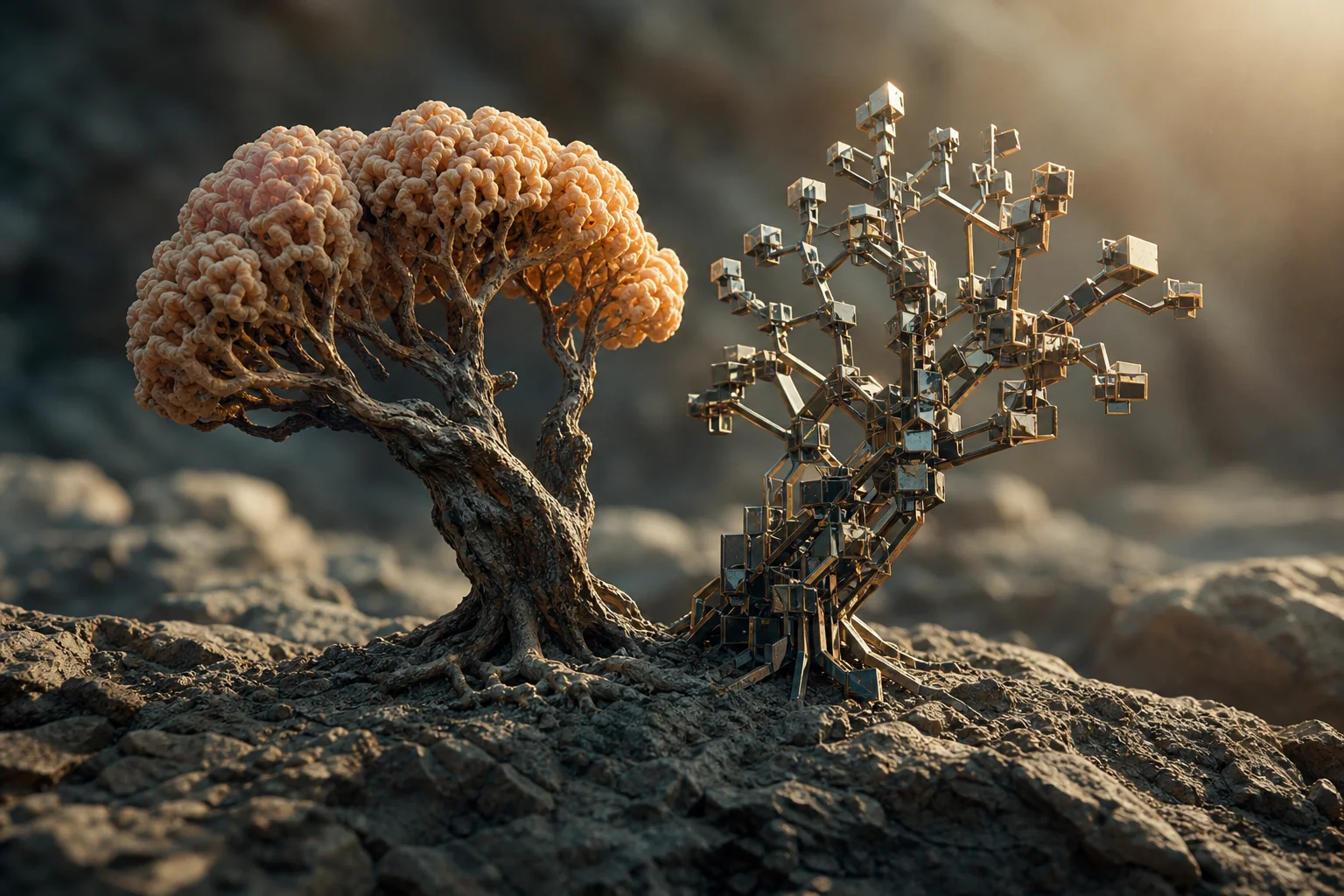
- Shared pressures may explain brain-AI alignment
- Differences across species are systematic and useful
- ANNs can match brains across very different designs
- Compare models by alignment clusters, not one best code
Why do brains and neural network (a software system inspired by how brain cells connect) models sometimes look so similar? This paper says the answer may not be a single universal code hidden in all minds and machines. Instead, it argues that alignment between artificial neural networks and biological brains can emerge when different systems face overlapping ecological constraints: the pressures of the environments they grow up in. The authors call this the Umwelt Representation Hypothesis, or URH. They review evidence that representational differences across species, individuals, and neural networks are systematic and adaptive, which is hard to fit with the idea of universality. They also note that recent comparisons can show similar matches to neural data across very different models, especially when the mapping from model to brain is flexible. The payoff is a new way to think about model comparison: not as a hunt for one perfect world model, but as a way to map clusters of alignment in ecological constraint space.
A rat, a human, and an ANN (artificial neural network) can all end up with similar internal maps. That does not mean they share one perfect code. It may mean they faced similar demands. If a brain and a model both need to pick out useful signals from messy input, some patterns will match. That is the surprise here. That turns a deep theory into a testable clue for brains and AI. This hypothesis argues that this overlap can come from ecological constraints, meaning the pressures a system meets in its own world. In that view, alignment is a trace of shared experience, not proof of a single universal mind.
Why the same match can mean different things
Recent ANN studies have hit a strange wall. Very different models can match brain data at similar levels. That includes different architectures, training goals, data, and learning rules. Some matches even hold when the model-brain link gets more flexible. URH says that does not point to one universal world model. It points to shared pressures. A brain, a person, and an ANN all face limits on what they can sense and use. They also need to act inside those limits. So similar internal structure can grow from similar demands. URH also stresses the other side of the story. Differences across species, people, and ANNs are often systematic and adaptive. That makes them signs of fit, not random noise.
How URH reads the evidence
URH works by changing the question. Instead of asking which ANN is closest to one best brain, it asks which worlds shaped each system. Here, world means the tasks, senses, and pressures that matter for survival or use. The review compares evidence across species, individuals, and ANNs. It looks for patterns that repeat and serve a purpose. That is what systematic and adaptive mean. The result is a map, not a verdict. Alignment becomes a region in ecological constraint space. That space is the set of conditions that can push different systems toward similar codes.
- Different species keep different maps of the same world.
- Individuals also show stable, useful differences.
- ANNs can match brains without sharing one universal code.
“alignment arises not from convergence toward a single global optimum, but from overlap in ecological constraints under which systems develop.”
“clusters of alignment in ecological constraint space”
Why this changes model comparison
This frame changes what a good comparison is for. A model no longer wins by being the one true copy of the brain. It wins by showing which pressures made the match. That is useful because living systems do not grow in a vacuum. They learn in bodies, species, and settings with their own limits. URH turns those limits into clues. It also explains why strong matches can still leave real differences in place. Those differences may be part of the signal. So the goal shifts. The goal is a map of alignment clusters, not a hunt for one final answer.
What to test next
The next test is whether this map still works when training goal, architecture, and input world all change together. URH predicts that match will keep tracking shared pressures, not one best code. That makes the useful result concrete. Labs can ask which kinds of systems belong in the same alignment cluster. They can also ask which differences stay adaptive, even when a model scores well on neural data. If that holds, one grand winner matters less. The map matters more. It tells us where brains and models meet, and why they meet there.
Comments