- Loops can be real causal structure
- Energy flow replaces no-loop rules
- Hodge theory splits flows into parts
- Resting-state fMRI reveals cyclic patterns
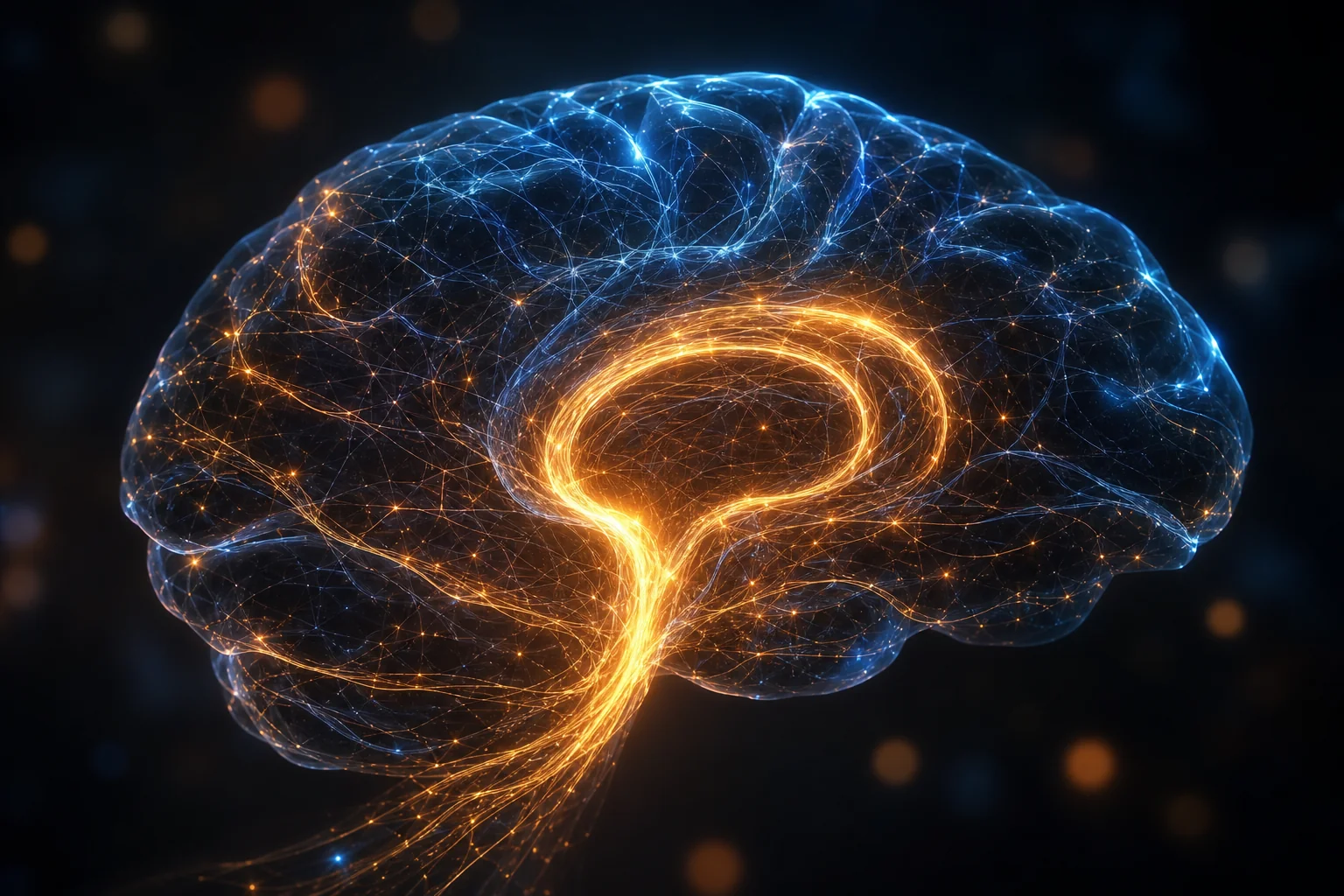
When signals loop instead of flowing neatly in one direction, classic causal models can miss the action. That is a big problem for brain networks, where recurrent and higher-order interactions are common. This paper replaces the usual acyclic view with a variational causal framework based on a minimum energy principle. In this picture, causality is directional energy flow from high-energy to low-energy states along network connections. Using Hodge theory, the authors split network flows into dissipative parts and a persistent harmonic part that captures stable cyclic interactions. Applied to resting-state fMRI connectivity, the framework reveals robust cyclic causal patterns that conventional causal models do not detect. The result points to a different way of thinking about causality: not just as a chain of causes, but as an energy landscape where loops can be real and persistent.
If you have ever seen a rumor bounce through a group chat, you know loops have force. A brain signal can work the same way. That is the surprise here. Classic causal tools prefer tidy chains. They often break when signals circle through a network. That matters for resting-state fMRI, a brain scan that tracks activity while a person rests. In that setting, the same regions can feed one another in repeat paths. The paper treats causality as energy flow. It says the flow moves from high-energy states to low-energy states. Then it asks which flows settle into stable loops. Those loops are not noise in this view. They are part of the cause.
Why no-loop causality runs out of road
Granger causality and structural equation modeling work best on simple chains. They also lean on pairwise relations, meaning links between two regions at a time. Real brain networks do not stay that neat. They often show cycles and higher-order interactions, meaning links that involve more than two regions. The new framework uses a minimum energy principle. That means it looks for the lowest-energy causal picture. Hodge theory, a math tool that splits a flow into parts, does the split. One piece loses energy as it moves. The other piece stays as a loop. That looping piece captures stable cyclic interactions. On resting-state fMRI connectivity, the framework reveals robust cyclic causal patterns. Conventional causal models do not detect them.
How minimum energy finds the hidden loop
The method starts with a simple rule. It turns causality into an energy-minimizing flow problem. That means the best causal map uses the least energy. The network then becomes a set of directed flows. Hodge theory, a math tool that splits a flow into parts, does the split. The dissipative piece, the energy-losing part, loses energy as it moves. The harmonic piece, the looping part, keeps a stable loop. That split matters because loops can survive the washout. The causal picture then comes from the flow itself. The framework does not force it in from the outside.
- Granger causality asks whether past signals help predict future ones.
- Structural equation modeling links variables with directed equations.
- Hodge theory splits a network flow into dissipative and harmonic parts.
“persistent harmonic component that captures stable cyclic interactions”
“The point is that the model no longer throws them away.”
Why the loops matter for brain maps
This matters because brain data often bend back on themselves. Classic causal models prefer acyclic setups, which means no loops. That rule can be too strict for complex networks. The new framework lets recurrent paths count as structure. It also opens the door to higher-order interactions, meaning links that involve more than two regions. In resting-state fMRI, that can expose patterns that old methods miss. The point is not that loops always matter. The point is that the model no longer throws them away. For neuroscience, that is a cleaner match to how networks often behave. For causality, it is a wider lens.
What to test next
Resting-state fMRI is the clearest test in this paper. It shows that stable loops can survive inside a causal map. That is the concrete shift. Cyclic patterns no longer need to vanish behind a no-loop model. They can appear as the signal itself. The next practical use is simple. Brain maps can now ask which loops stay persistent. That gives network analysis a new target. It is not just who connects to whom. It is which paths keep circling with energy.
Comments