- Physical-world action is still a weak spot
- Body and controller should be designed together
- Prediction and neuromodulatory control may improve learning
- Sparse event-driven hardware could cut waste
- Cross-trained people and shared labs are part of the plan
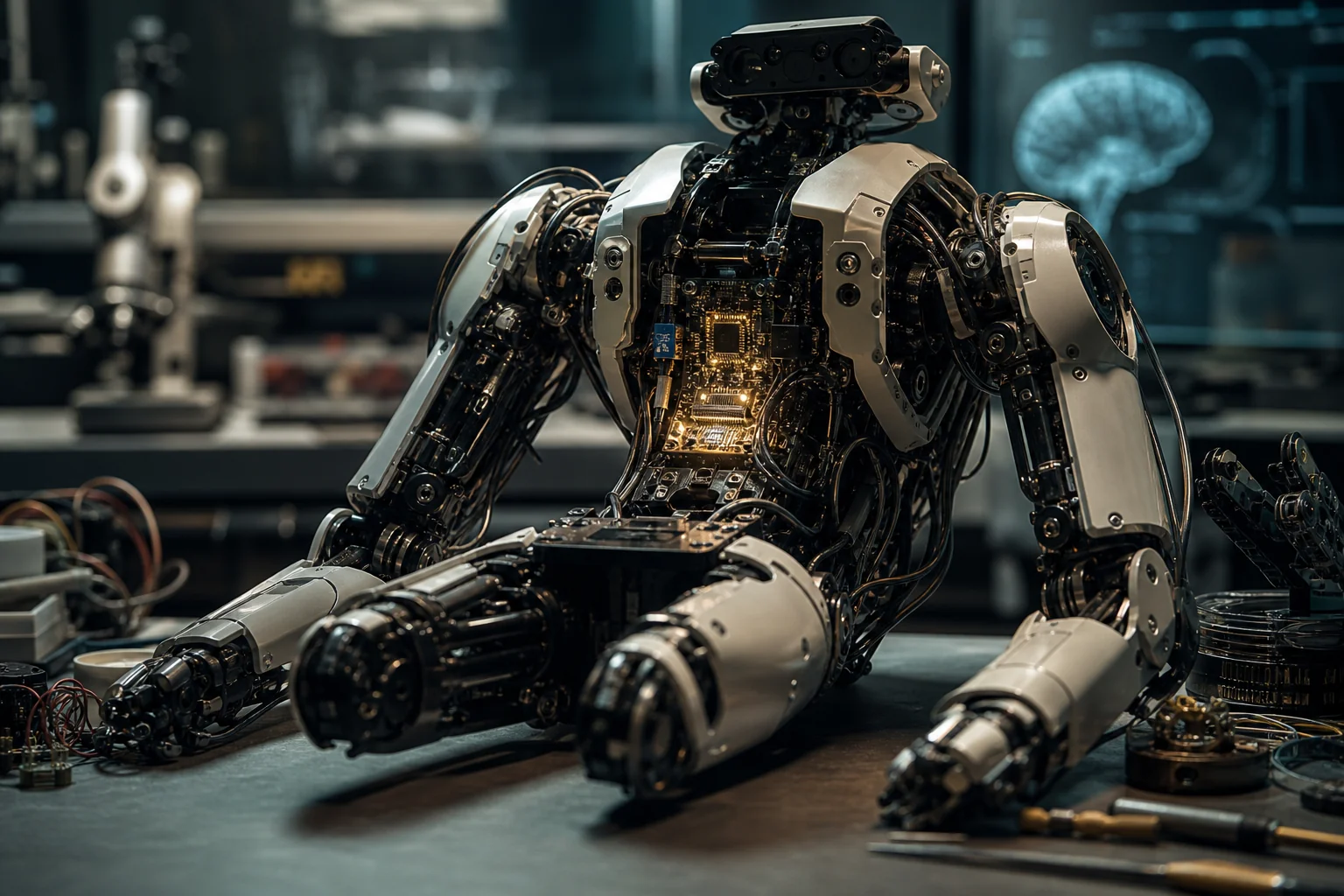
Today’s AI can talk and predict, but it still struggles with the basics of acting in the real world. A workshop report from August 2025 says current systems face three big gaps: they cannot reliably interact with the physical world, they learn in ways that make them brittle, and they use too much energy and data. The paper points to neuroscience for clues: designing bodies and controllers together, learning through prediction and interaction, using multi-scale learning with neuromodulatory control, building hierarchical distributed architectures, and relying on sparse event-driven computation. It also lays out a roadmap for near-, mid-, and long-term research. The authors argue that making this happen will take a new generation of researchers trained across neuroscience and engineering, plus the right support: interdisciplinary training, hardware access, community standards, and ethics. In their view, NeuroAI could help fix current AI’s limits while also revealing more about how biological neural computation works.
Three gaps still hold AI back. An August 2025 NSF workshop shaped the report. It says today's systems still struggle to act in the physical world. They also learn in brittle ways. They also burn too much energy and data. That matters the moment a machine leaves the chat box. A robot arm must move through a cluttered kitchen. A home device must learn from a few real examples. A phone battery cannot feed a power-hungry mind all day. NeuroAI treats the brain as a clue trail, not a magic trick.
The three cracks in current AI
The report groups the fix into three brain-inspired ideas. First, body and controller should be designed together. A controller is the part that chooses action. A body is the machine's shape and sensors. Second, prediction should come through interaction. The brain keeps guessing what comes next. It then updates from the result. Third, learning should work at many scales at once. In the brain, fast local changes and slower global control work together. The report links that idea to neuromodulatory control. That means chemical-like signals that tune how learning happens. It also points to hierarchical distributed architectures. Those are layered systems that spread work across parts. And it points to sparse event-driven computation. That kind of system wakes only when something changes. The point is simple. AI's missing skills may come from missing design rules, not just missing training data.
How the brain teaches a different build plan
The roadmap splits the work into near, mid, and long-term steps. It does not promise one trick. It asks labs to build systems like biology builds brains. That means pairing sensors, bodies, and control rules from the start. It means letting a system learn by acting, then correcting itself from the result. It also means mixing quick local learning with slower signals that shift the whole network's state. The report says this work needs better hardware access, shared standards, and ethics. It also needs people who can cross neuroscience and engineering. Without that mix, the ideas stay in separate silos.
in current AI
brain-inspired fixes- Current AI still struggles to act in the physical world.
- Many systems learn in brittle ways that fail outside training.
- Most models still use too much energy and too much data.
“Neuroscience and Artificial Intelligence (AI) have made impressive progress in recent years but remain only loosely interconnected.”
Why this changes the build plan
This is not just a wish list for better software. It changes what counts as a good AI system. If a model must act in the physical world, then its body matters. If it must learn without brittleness, then its learning rule matters too. If it must run on less energy and data, then the hardware matters as well. The report also puts people at the center. It calls for interdisciplinary training, hardware access, community standards, and ethics. That means the next wave of AI work may need labs that mix brains, chips, and robots in one place.
What to test next
Three gaps, one system. That is the sharp test. It must act in the physical world. It must learn without brittleness. It must do both with less energy and data. That is the promise of NeuroAI. The surprise is not that brains are smart. The surprise is that body design, learning signals, and sparse hardware may be the real keys. The next step is not a grand slogan. It is a hard build in a real lab, under the near-, mid-, and long-term plan the report lays out.
Comments