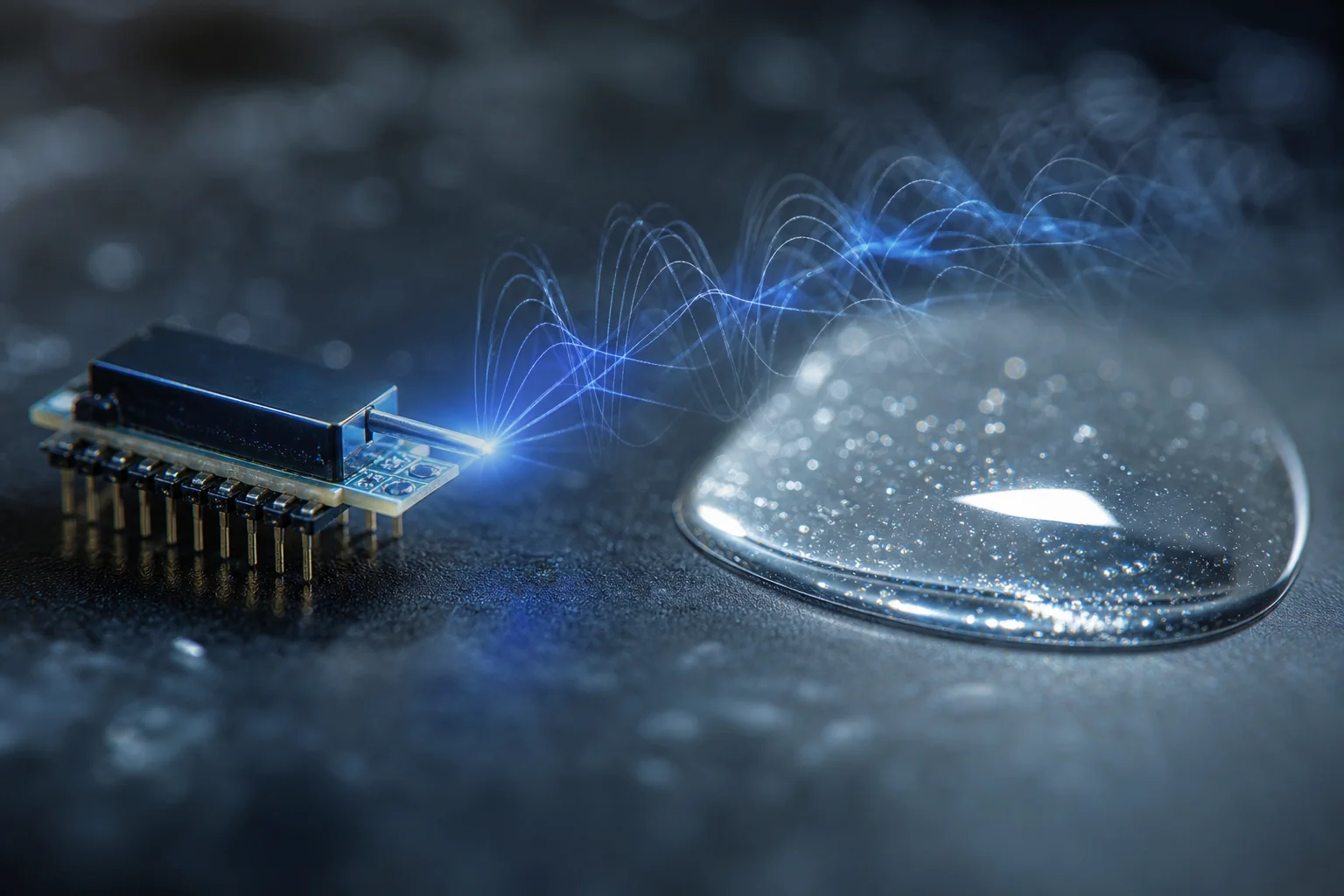
- Flexoelectric resonance in silicon nanowires
- 62% conductance rise with radio waves
- Debye screening weakened in salty fluid
- Direct detection without sample dilution
Blood and other body fluids can hide weak biomarker signals the way salt blurs a tiny charge in a crowded room. This paper shows a way to coax those signals back out using silicon nanowire field-effect transistors and radiofrequency fields. The radio waves create strain gradients in the nanowires, which generate flexoelectric polarization and become stronger at resonant frequencies. In tests with C-reactive protein, the sensor produced a 62% conductance increase with radiofrequency modulation, compared with 30% without it — about an order-of-magnitude improvement in detection sensitivity. The high-frequency field also disturbed the electrical double layer, which helped reduce Debye screening in high-ionic-strength conditions. That mattered because it allowed direct biomarker detection without diluting the sample first. The paper argues that flexoelectric resonance could be a general strategy for improving nanoscale biosensing in physiologically relevant fluids.
Salt can bury a sensor's signal as fast as it buries sugar in soup. That is a real problem for blood tests. A tiny charge on a biomarker, a molecule that hints at disease, can vanish in fluid full of ions. This setup finds a way to pull that charge back into view. A radiofrequency field makes silicon nanowires act like a louder microphone. In tests with C-reactive protein, the conductance jumped 62% with radio waves. Without them, it rose only 30%. The trick is not stronger chemistry. It is the way the wire moves. That motion makes a weak binding event easier to hear.
Why salt hides a charge signal
Silicon nanowire field-effect transistors are tiny switches that sense surface charge. The key twist is flexoelectric resonance. Flexoelectricity means a material builds electric polarization when it bends unevenly. In these nanowires, a radiofrequency field creates strain gradients, or changes in bend from place to place. At resonant frequencies, that bending response grows stronger. The nanowire then reacts more to small charge changes from biomolecular binding. The result is a bigger conductance signal, which is the ease with which current flows through the device. That extra signal gave about an order-of-magnitude gain in detection sensitivity. The CRP test showed 62% conductance rise with modulation, not 30% without it.
vs 30% without radiofrequency modulation
conventional operation- The radiofrequency field creates strain gradients in the nanowire.
- Those gradients raise flexoelectric polarization at resonant frequencies.
- The same field also disturbs the electrical double layer.
“This work establishes flexoelectric resonance as a general strategy for improving nanoscale biosensing performance in physiologically relevant conditions.”
How the radio wave helps the wire hear
Debye screening is the way dissolved ions hide electric charge in salty fluid. The electrical double layer is the thin cloud of ions that wraps a charged surface. Both effects make biomarker sensing hard in real samples. The radiofrequency field helps in two ways. It shakes the nanowire. It also stirs that ion cloud. That makes the surface charge from binding events easier to read. The setup then tracks conductance instead of chasing a weak faraway electrostatic pull. Because of that, direct biomarker detection worked without sample dilution. At high ionic strength, that matters most.
“direct biomarker detection without sample dilution.”
Why this matters for body-fluid tests
This matters because biosensors usually lose their edge in body fluid. The salt around them blurs small surface charges. The radio wave keeps the signal alive in that noisy setting. It also removes the need to dilute the sample first. That is a big practical gain for point-of-care tests, or tests done near the patient. Each extra prep step costs time and can hurt accuracy. Flexoelectric resonance looks like a general way to improve nanoscale biosensing. It fits the salty world of blood, serum, and similar fluids.
What to test next
The next hard test is whether the same resonance window works in high-ionic-strength environments, or very salty fluids. C-reactive protein was the model case here. If it does, sample dilution may stop being the first move in nanowire tests. That would make the sensor easier to use in real clinics. It would also let the wire listen where the salt is strongest. The surprise stays the same. A radio wave does not just add noise. It helps the wire hear through the noise.
Comments